Branch Education explains how technology works with detailed 3D animation on YouTube. Since 2021 we've built most of the channel's 3D models, from hard drives and graphics cards to an electron microscope and a full microchip factory, often from products we bought and took apart ourselves. Our name is in the credits of 14 videos with more than 61 million views.
Branch Education is a YouTube channel that explains how technology works using detailed 3D animation: computer mice, hard drives, graphics cards, satellites, and the machines that make microchips. Teddy Tablante, who runs the channel, researches and scripts each video, and the standard is strict. Every part on screen has to look and behave like the real thing, because a lot of the people watching are engineers and students who will notice when it doesn't.
Prakash Kakadiya, Acoroid's founder, was the channel's first 3D modeling hire in 2021. We have worked on the channel ever since, and our name is now in the credits of 14 videos with more than 61 million views between them.
Most of what Branch Education explains is consumer hardware, and nobody hands out the CAD for that. So we buy the product and take it apart, down to the circuit board. We scan the parts with a high-resolution scanner so the smallest components can be read clearly, photograph every side, and rebuild each part with the same shape, size and materials.
For How does Computer Hardware Work? that meant modeling the processor, graphics card, motherboard, RAM, hard drive, SSD and NVMe drive, power supply, liquid cooling and the case, down to the small capacitors and solder joints on the board. The goal was simple to say and slow to do: put our model next to a photo of the real part and see no difference.
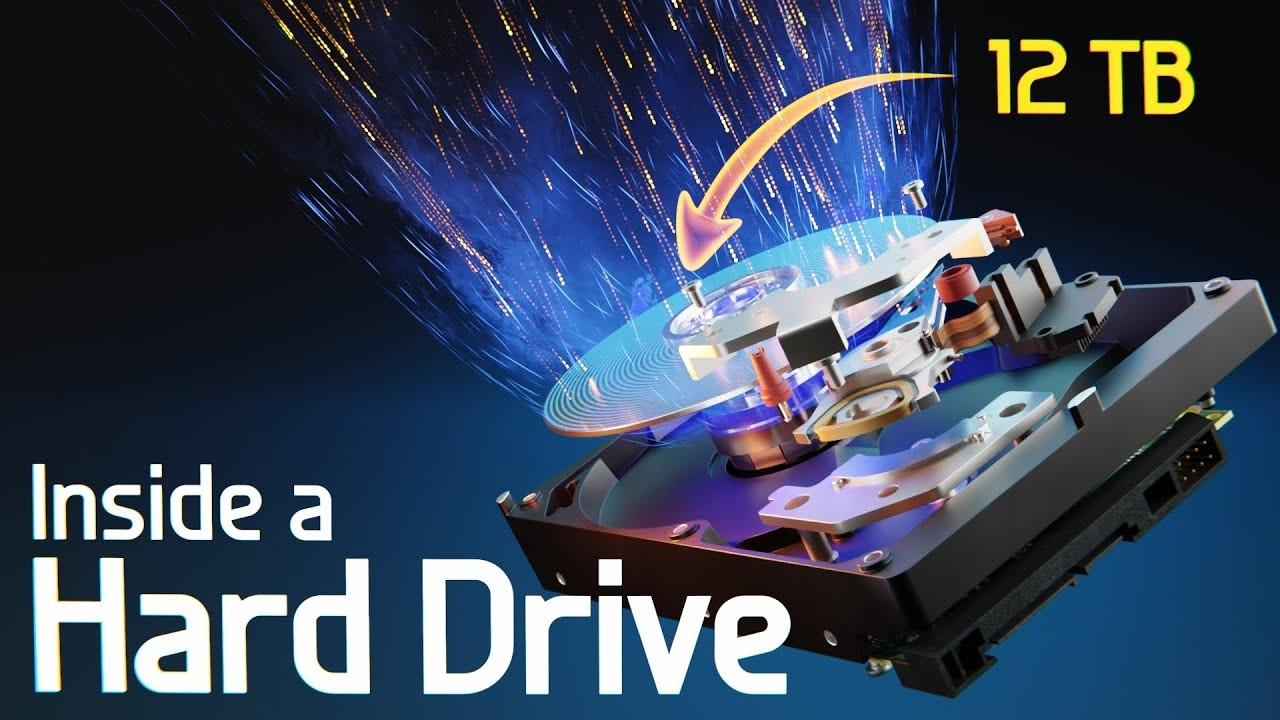
We took a hard drive apart, modeled every part, and animated how it reads and writes data. Getting the technology right took days before any animation started, and it took a few rounds of back and forth to reach the quality the channel is known for. The video credits us for both the modeling and the animation.
This time the client did send a CAD model, but parts of it were missing because they were confidential. We cleaned up the geometry, researched how an electron microscope works, and modeled the missing internal parts ourselves. The video runs close to 20 minutes, so the animation was split between us and the channel's other animator to get it finished sooner.
Our biggest job for the channel. We modeled a complete semiconductor fab: the EUV lithography tool, photoresist spin coaters and strippers, developer, dry etch, chemical and physical vapor deposition, epitaxial growth, ion implantation, wafer cleaning and metrology tools. Then we built the clean room around them and the automated overhead system that carries wafers from one machine to the next. We also animated part of the video, showing how the layers of a chip and its billions of transistors are built up.
Very little of this is documented in public. Most of the work was research: working out what each machine looks like inside and what it actually does, before modeling a single part.
A microSD card holds stacked memory chips and the tiny wire connections between them, inside a part smaller than a fingernail. There's almost no public detail on how that stack is laid out, so the model came from research rather than drawings. The video passed a million views within weeks of going live.
These are the Branch Education videos that credit Prakash Kakadiya, with views as of October 2026:
| Video | Year | Our credit | Views |
|---|---|---|---|
| How are Microchips Made? | 2024 | Animation | 11.7M |
| How does Starlink Satellite Internet Work? | 2022 | Modeling | 9.8M |
| How do Graphics Cards Work? | 2024 | Modeling | 7.6M |
| How do Video Game Graphics Work? | 2023 | Modeling and animation | 5.4M |
| How does a Mouse know when you move it? | 2021 | Modeling | 5.3M |
| How do Electron Microscopes Work? | 2023 | Modeling and animation | 4.7M |
| How does Computer Hardware Work? | 2023 | Modeling | 3.9M |
| How do Hard Disk Drives Work? | 2022 | Modeling and animation | 3.2M |
| How do CPUs Work? | 2025 | Modeling | 3.1M |
| The EUV Photolithography System | 2025 | Modeling | 2.2M |
| How does Ray Tracing Work? | 2024 | Modeling | 1.5M |
| How do microSD Cards Store 2 TB? | 2026 | Modeling | 1.2M |
| The Incredible Evolution of Computers | 2026 | Modeling | 856K |
| How does Computer Cache, Memory, and Storage Work? | 2026 | Modeling | 489K |
The comments are the part we're proudest of. Students and people who work in these industries regularly write that a 20-minute video made something clear that they had struggled to understand for years.
The skills behind these videos are the same ones our industrial clients pay for: reading CAD, filling in what the files leave out, and showing how the inside of a machine works so someone can follow it on the first watch. If we can rebuild a lithography machine from research, your product, with its CAD files, is a much more straightforward job. You can see that side of our work on our case studies page.
Yes. We often buy the product, take it apart and rebuild every part from high-resolution scans, photos and measurements. That is how we modeled the hard drive and most of the computer hardware for Branch Education. For a manufacturer, photos, drawings and a few key measurements are usually enough to start.
We clean up the geometry and model the missing parts from research and reference images. On Branch Education's electron microscope video, the CAD model was missing confidential internal parts, so we researched how the microscope works and built them ourselves.
Both. Branch Education credits us for modeling on 14 videos and for animation on four of them, including the hard drive, electron microscope and microchip manufacturing videos. For most industrial clients we handle the whole job, from the 3D model to the finished animation.
That is most of the work on these videos. We research how the machine works before modeling anything, then show the process in an order a viewer can follow. Branch Education's How are Microchips Made?, which walks through dozens of fab steps, has more than 11 million views.