TuckRack needed an animation showing how its truck rack installs and folds away, and it needed it in under two weeks. There were no CAD files, just photos and measurements, and the budget didn't stretch to a custom truck model. We built the rack from those photos, reworked a stock truck model until it looked like the real thing, and delivered on time. The video now leads TuckRack's How It Works page.
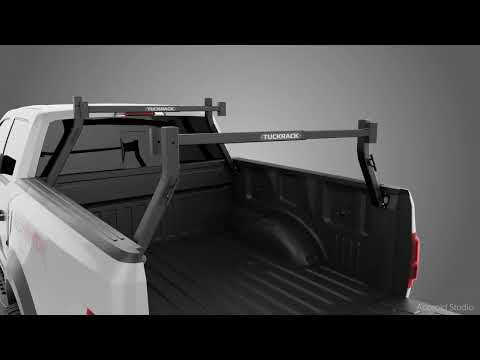
TuckRack is a family-owned company in Massachusetts that makes a steel ladder rack for pickups. Unlike a fixed rack, it folds down flat into the truck bed when you don't need it. TuckRack calls it the first foldable truck rack of its kind, rated for up to 500 lbs.
That fold is the whole reason to buy it, and it's also the hardest thing to sell with photos. A still image shows a rack standing up, or a rack lying down. It doesn't show how little effort it takes to go from one to the other.
The client wanted two things to come across clearly:
The video had to show both in under half a minute.
Most of our projects start with CAD files. This one didn't. TuckRack sent us product photos and a set of measurements, and that was the full reference.
For a folding product, getting the model right isn't just about looks. If an arm is a few inches too long, it won't fold flat inside the bed walls in the animation. If a pivot sits in the wrong place, the rack swings through the truck instead of over it. Viewers who own a pickup notice that kind of thing immediately.
So we built the rack part by part: the bed-mounted brackets, the uprights, the crossbars and the pivot points. We checked each part against the photos and measurements, then tested the fold in 3D before any animation started. Only once the rack folded and stood up the way the real one does did we move on.
The rack needs a truck, and the truck is on screen the whole time. A custom-built pickup was out of reach for the budget, so we started from a truck model bought from a 3D library.
Library models are made to look good in a single glamour shot, not to hold up in close-ups of a truck bed. This one needed a lot of work before it could carry the product:
We went through several internal review rounds on the truck and rack together before showing anything to the client. By the time it went to TuckRack, the model was ready to animate.
The lesson for anyone on a tight budget: a library model can work, but only if someone budgets the time to fix it. Used straight out of the box, it's the first thing a viewer notices.
The deadline was tight: one to two weeks from the start. Because the modeling was locked in before animation began, there was no going back to fix proportions halfway through. The client approved the first version we sent, with no revisions.
The finished video runs about 25 seconds and follows the order a buyer thinks in:
It closes on TuckRack's tagline: "Tuck. Load. Trust. TuckRack."
TuckRack uses the animation as the main video on its How It Works page, the page that explains the product to buyers before they order. It's also on YouTube.
"The video turned out great and it was super easy to work with him!"
— TuckRack
Yes. Clear photos from several angles and key measurements are enough for most products. We model it part by part and check it against your photos before animating. CAD is faster and more exact, so if you have it, send it.
Overall size, plus anything that moves or connects: pivot points, arm lengths, bracket positions, and how far things travel when they open or fold. For a folding product, those numbers decide whether the animation looks right.
Not always. A library model can be reworked to look real, which saves budget. We'll tell you up front whether that will hold up in close-ups or whether a custom model is worth it.
This one took under two weeks. Short product videos with ready references can move that fast. Longer videos, or products that need a lot of modeling, take longer.
Yes. TuckRack uses this one as the main video on its How It Works page. We deliver files ready for your website, YouTube and social media.